
AI Support Has Not Reduced Human Work: Check the Handoffs First
If AI support has not reduced manual inquiries, check knowledge, business actions and human handoff first. Measure resolved issues and repeat contacts; reception volume alone does not prove lower workload.
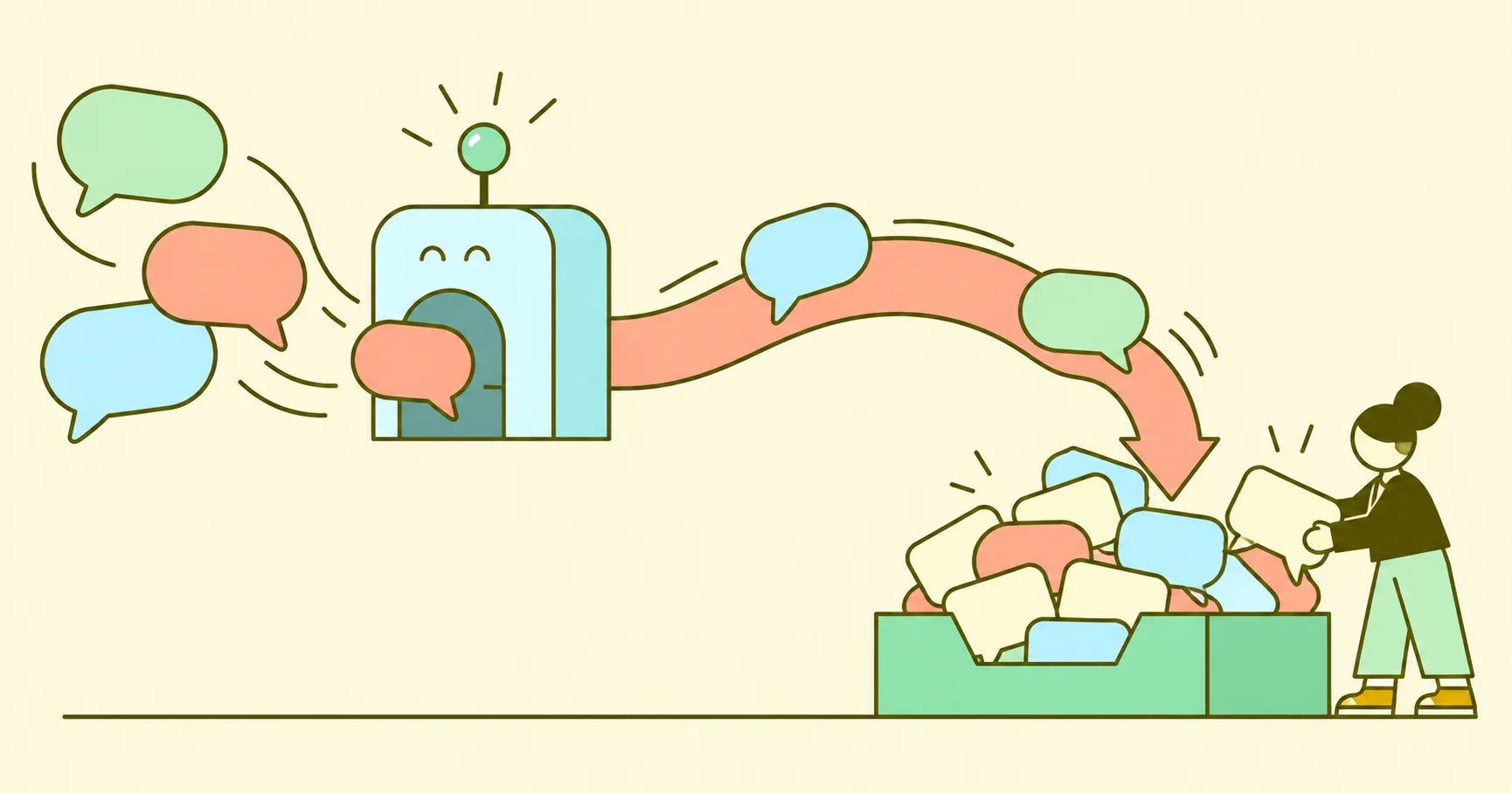
As reception increases, why manual tasks still pile up
After the customer receives the reply, the matter may not be finished yet. The robot explained the order inquiry entry, but the customer still could not find the status; it gave after-sales instructions, but the application did not enter the processing process. The consultation was received and the answer appeared, but the customer's goal was not completed and he still had to find someone for the follow-up.
The end-to-end workflow of diversion here is a continuous process from identifying demands, obtaining applicable knowledge, completing allowed business actions, and then bringing the processing results back to the records. If any link is disconnected, customers may ask questions, change entrances for help, or enter the manual queue with the same questions. The more repeated problems there are, the easier it is for this backflow to take up manual energy.
Another point of amplification is at the handover. If there is a lack of customer demands, information that has been checked, and unfinished items when transferring employees, the takeover personnel will have to ask and check again. The robot conversation looks lively, but humans are burdened with the work of reading chat records and correcting errors.
These are possible mechanisms that need to be checked, not root cause determinations for the current system. Extract the sessions where re-consultation occurs, find the follow-up processing actions along the work order, check whether it is stuck after the answer, and whether the human has re-completed the steps that the robot has tried.
Breakpoint after answering, how to push shuntable questions back to manual
When the problem coverage is insufficient, the robot may capture a certain word but not what the customer wants to do. The applicable conditions for pre-sales consultation, the actual progress of order consultation, and the qualifications for after-sales consultation processing require different basis and actions. Putting them in the same general answer will easily lead to "there is a reply, but it's not the right question".
Expired knowledge will bring customers to the invalid entrance or inapplicable rules; even if the data is correct, if the system cannot read the order, initiate the application or return the execution result, the answer will only stop at the explanation level. For issues that depend on business status, smooth language expression cannot replace actual handling.
Mismatching the boundaries of manual transfer can also cause backflow: simple and verifiable consultations are upgraded prematurely, which will retain the original manual burden; requests that exceed authority or require case-by-case judgment are stuck on the robot side, and may go through multiple rounds of invalid communication before taking over. The latter may not necessarily reduce labor costs, but it may make the handover more difficult.
During the inspection, the customer's original words, the version of knowledge adopted at the time, and execution records are retained. If the rules are not applicable, correct the scope of application; if the action is not implemented, check the permissions and interface returns; if the boundary identification deviates, adjust the upgrade conditions. Only if misunderstandings persist after eliminating these breakpoints can there be a basis for advancing capability assessment to the model.
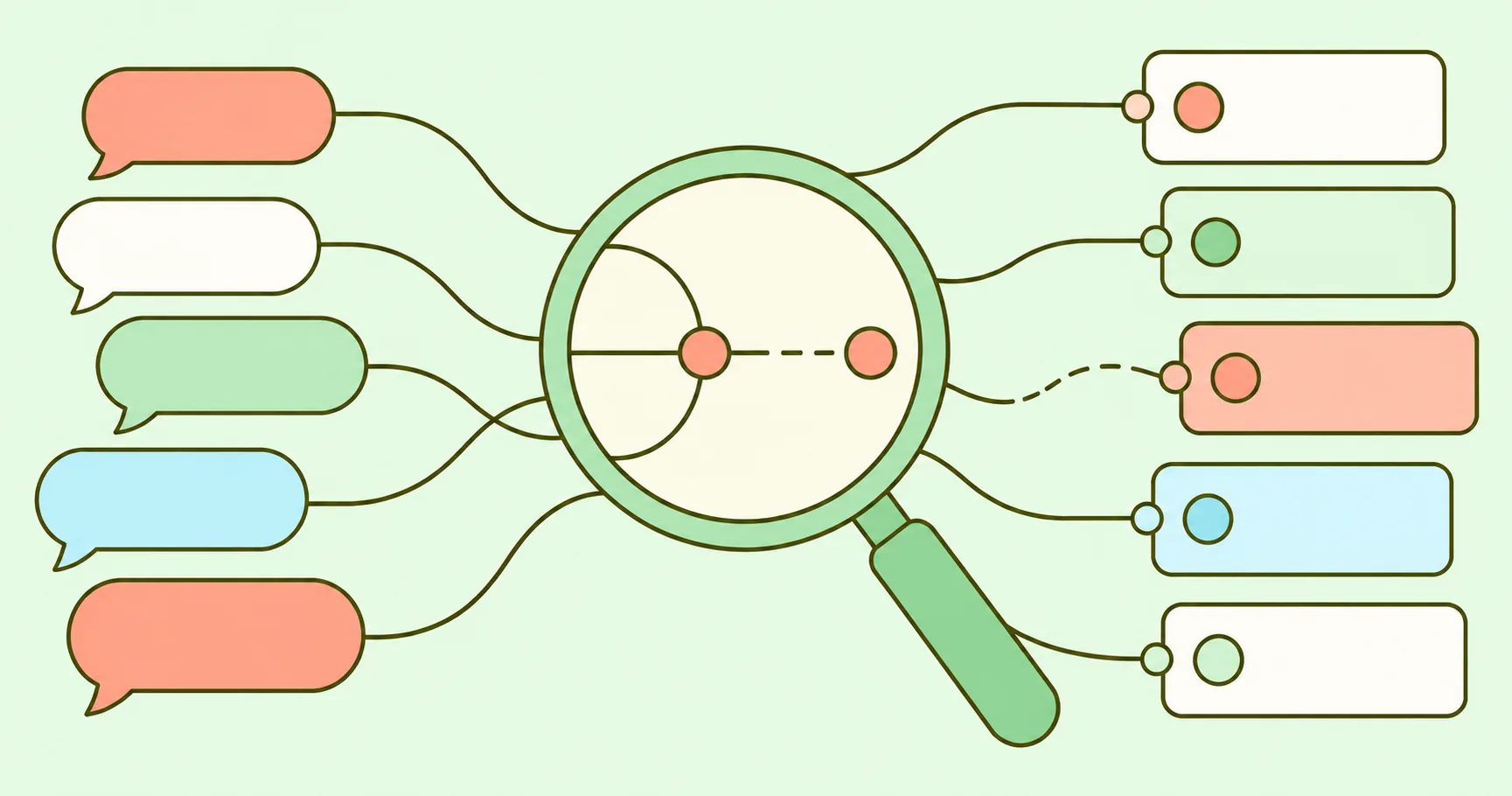
Connect conversations to final results by question type
Sampling the recurring demands of the company, and further subdividing them into tasks that can determine the results according to pre-sales, orders, and after-sales, such as explaining applicable conditions, checking status, and submitting after-sales applications. Let the robot path and the manual path be checked around the same appeal to avoid direct comparison of consultations with different complexity.
Resolving evidence should vary with the task. Information consultation depends on whether the answer responds to actual problems based on valid information; business processing depends on whether the status reaches the agreed result. The customer is no longer speaking for the time being just to observe the signal. If there is no follow-up record, it cannot be directly recorded as resolved.
- Issue coverage: Record which processing path high-frequency appeals enter, and whether the issue itself or the way of expression is missed.
- Knowledge reliability: Map answers to authoritative sources, applicable objects and update times, and trace who maintains conflicting content.
- Independent solution: Check whether the customer's goal is achieved, and distinguish between providing guidance and actual settlement.
- Error escalation: Check whether requests that should be manually judged continue to be processed automatically, and whether simple requests are forwarded without reason.
- Repeat inquiries: Correlate subsequent contacts with the same request to find out whether the customer is supplementing information, urging processing, or re-asking for solutions.
- Takeover burden: Observe the work of manual re-querying, information checking, error correction and execution, and identify the increased costs of handover.
- Result reflow: Check whether manual processing conclusions have been included in problem classification and knowledge revision, so that similar problems can leave a basis for improvement.
Fix the Bottleneck, Then Measure Workload
Prioritize tasks with high frequency, clear processing rules, and verifiable results for improvement. The goal is not to leave all inquiries in the robot, but to reduce the number of appeals that are suitable for diversion and allow matters that require human judgment to reach the right person in a timely manner.
The following branches are to be supported by records. If there are multiple breakpoints for the same problem, first repair the link that first prevents the completion of the task, and then check the downstream handover; avoid merging multiple defects into a vague "the robot is not easy to use".
| recorded phenomena | Prioritize improvements | Basis for subsequent judgment |
|---|---|---|
| Common appeals do not enter the correct path | Supplement problem classification and entry guidance, and retain the destination of unrecognized requests. | Whether the customer can achieve the applicable tasks, and whether the missed call will continue to cause return visits |
| Reply citing invalid or conflicting rules | Designate knowledge sources and maintenance responsibilities, and clean up the use scope of old content | Whether the new answer is consistent with the current rules and whether the old answer is still called |
| The instructions are correct, but the process stopped midway. | Open up authorized business actions and provide manual connection for failed returns | Whether the business record has actual results and whether someone will continue processing after failure |
| The receiver asked for the same information repeatedly | Deliver necessary context, actions taken, and remaining items along with the handover | Whether manual investigation still needs to be done from scratch, and whether customers are repeatedly asked for information |
| The data and processes are available, but errors in understanding the intent are still repeated. | Establish typical conversation evaluations to compare knowledge retrieval, prompt settings and model solutions | Whether the identification and resolution of similar complaints have been improved, and whether there are any new errors or work taken over |

When is a model upgrade worthy of evaluation?
If a robot obtains the correct information and is able to perform allowed actions, but still has difficulty understanding another word of the customer, or is missing key conditions in a complex context, model capabilities may be a candidate for improvement. The evaluation should use the company's real and desensitized appeals, retain the original expressions that are prone to failure, and not just show examples with more fluent answers.
Fix task purpose, accessible materials, permission boundaries, and resolution criteria when comparing options. See if the changes reduce misunderstandings and ineffective questioning, and also observe error handling, knowledge maintenance, operating costs, and manual takeover. After verification through similar tasks, complete usage conditions including maintenance and supervision are compared.
If the answer improves but the work order is still stuck at the same place, go back to the execution process; if the answer record improves but the labor is busier, check for structural changes and take over the work. Cost and efficiency changes are affected by consulting structure, knowledge maintenance, process authority and human collaboration and cannot be attributed to a single model.
Establish a supervised trial run and move forward with evidence
Companies that already have robot portals, have a lot of repeated consultations, and can obtain session and work order records are suitable for this type of diagnosis. Before implementation, the business leader must define the resolution criteria, have knowledge maintenance personnel to handle conflicts, and have the takeover team be able to identify which step to automatically handle.
Requests involving identity verification, complaint disputes, expense disposal, or requests exceeding authorization should be submitted to manual judgment according to established rules. The scope of automatic processing is determined by available evidence and actual authority; the fact that the Agent can call tools does not mean that it can be left unattended.
Feedback failed sessions and manual conclusions to the person responsible for knowledge and processes, and re-observe similar tasks after revision. If an error occurs again, the corresponding automatic action will be suspended or the scope of application will be reduced; if the performance is stable, a decision will be made on whether to expand the trial operation based on risks and takeover capabilities.
Common Problems
Do Fewer Human Handoffs Prove Better AI Support?
It also depends on where the customer goes. If the customer gives up communication, changes channels for help, or the request never enters the work order, the apparent decline may conceal unhandled matters. Only by combining follow-up contact and business status judgment can we distinguish between task completion and customer exit.
Which inquiries are not suitable for direct automatic processing?
Manual intervention should be reserved for matters that require case-by-case discretion, have conflicting sources, or are difficult to withdraw after execution. Low-risk data interpretation can be trial-run first; even if the problems are common and there is a lack of authorized actions or clear result standards, it is not appropriate to handle them directly and automatically.
Can the knowledge base be directly supplemented with historical work order conclusions?
Let’s first distinguish between general rules and individual case handling at the time. Historical conclusions may rely on special permissions, customer status, or changed policies. The business leader should check the applicability, then remove personal information and special disposal content, and convert it into maintainable knowledge.
Why Can Problems Appear After Expanding Coverage?
New groups of people may use different expressions, bringing more complex demands, and the takeover team may also queue up. Compare the new failure types with the original trial operation tasks to check whether the coverage changes or the handover load is insufficient, and then decide to expand knowledge, adjust the entrance, or withdraw part of the scope.